
Colombian Food, Explained: Regional Classics, Staples, and Ordering
There's a moment when Colombian food clicks. You're halfway through a plate, and you realize everything on it belongs together: the starchy, the savory, the rich, the fresh. Nothing fights for attention. It all just works.
That's what sets Colombian cooking apart. It feels familiar, like real comfort food does, but it's completely its own thing. This guide breaks down the staples, the must-know dishes, where they come from, and how to order confidently when you're staring at a Colombian menu for the first time.
What Sets Colombian Food Apart From The Rest Of Latin America
Colombia's geography does a lot of the work. The country runs from the Caribbean coastline to the Andean highlands, the Amazon jungle, and the open plains. Each zone eats differently, and those differences show up on the plate.
The flavor profile across most of the country is savory-forward and hearty. Colombian food rarely leans fiery. It builds depth through slow cooking, layered aromatics, and technique rather than heat.
The roots are still visible in everyday cooking. Indigenous staples like corn and potatoes anchor most meals. African influence, carried through centuries of history, shows up in fried preparations and coastal rice dishes. Spanish techniques tied everything together. Within the broader conversation about Latin American cuisine, Colombian food holds its own as grounded, filling, and deeply regional.
The Staple Ingredients You'll See Everywhere
Corn, rice, plantains, and potatoes form the backbone of most Colombian plates. You'll find them in some combination on almost every table, in every region, at every meal.
Proteins rotate between chicken, pork, and beef depending on the region. Along the coasts, fresh fish takes over. Inland, pork and beef carry most of the weight.
Hogao is the quiet engine behind authentic Colombian food. It's a sofrito made from slow-cooked tomatoes and green onions, and it shows up as a base, a topping, and a sauce across dozens of dishes. Cumin, achiote, and fresh herbs like cilantro do the seasoning work without overpowering anything.
The Dishes Every First-Timer Should Know
And once you’ve met the big plates, the snack side of Colombian food deserves its own spotlight.
Bandeja Paisa
This is the plate that makes people go quiet. Bandeja Paisa comes from the Antioquia region, and it's designed to fuel a full day. Beans, rice, chicharrón, a fried egg, avocado, and an arepa all land on one tray. It's not subtle, and it's not meant to be.
Ajiaco
Bogotá's signature dish is a thick chicken soup built from three varieties of potato and a highland herb called guascas. It comes out earthy and rich, served with cream and capers on the side to stir in as you go. Cold-weather food at its best.
Sancocho
Sancocho is the catch-all stew of Colombian cooking. Meat, root vegetables, corn on the cob, and cilantro go in. Every region has its own version. The coastal one uses fish. The highland version goes heavier on root vegetables. All of them are filling and restorative.
Empanadas
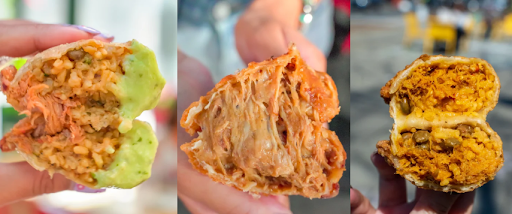
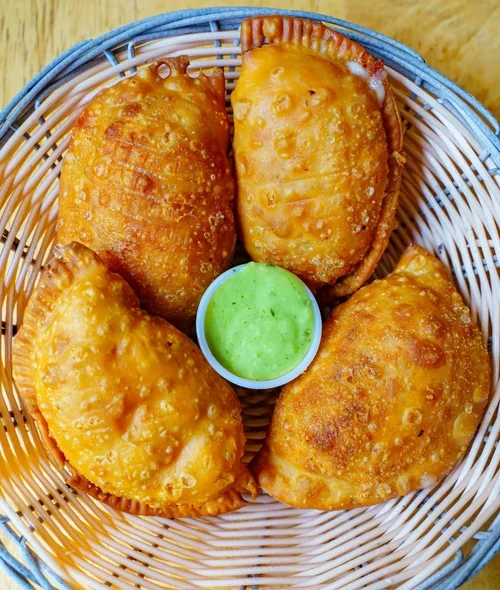
The crispy corn shell is the tell. Colombian empanadas have a golden, slightly crunchy exterior that gives way to a savory filling inside. Fillings shift by region: beef and potato, chicken, rice, and egg. The format stays the same. They're among the top Colombian foods for a reason: portable, satisfying, and good at any hour.
Once you know the regions, the next move is knowing the dishes that show up again and again.
Colombian Street Food and Snacks Worth Knowing
Arepas are griddled corn cakes eaten plain, stuffed with cheese, or loaded with toppings. They show up at breakfast, as a side, or as a full snack on their own.
Patacones are twice-fried rounds of green plantain, pressed flat and fried again until crispy. They work as a base for toppings or are eaten straight with a dipping sauce.
Pandebono and buñuelos are the cheesy, puffy bites that disappear fast at any table. One is baked, one is fried, both are made with cheese-laced dough, and gone before you know it. Obleas are thin wafer rounds sandwiched around arequipe, a thick caramel spread, or fruit jam. Easy to eat walking, impossible to eat just one.
A Quick Regional Breakdown
Colombian food changes fast from one region to the next, so the easiest way to understand it is to follow the geography.
Bogotá and the Andean Highlands
The mountain climate drives the menu here. Ajiaco is the star, but calentado, a breakfast plate of reheated rice and beans from the night before, and changua, a milk-based herb soup, show how warming and starchy Andean food tends to run.
Medellín and Antioquia
This is Bandeja Paisa territory. Portions are large, pork shows up in multiple forms on the same plate, and beans are a constant. The food is built for people who work hard and eat accordingly.
Cartagena and the Caribbean Coast
The coast eats differently. Fried whole fish, coconut rice, and cazuela de mariscos, a rich seafood stew, are the anchors here. The flavors feel brighter, the proteins come from the water, and African culinary influence shows up clearly in the region’s rice, seafood, and frying traditions.
That regional variety is exactly why Colombian cuisine feels so layered: one country, many climates, and a whole lot of flavor logic.
How to Order Colombian Food Without Second-Guessing Yourself
Start with the corrientazo if you're eating at lunch. It's the affordable daily set meal most locals order: a soup, a main plate with protein and sides, and sometimes a drink included. Fast, filling, and a reliable way to eat well without overthinking it.
Colombian meals often follow a sopa-then-seco structure. Soup comes first, then the dry plate. If you see both on the menu, that's the intended order.
On most Colombian menus, proteins and sides are listed separately. You pick your protein, then add rice, beans, plantains, or salad on the side. More modular than it looks once you understand the format.
Start With the Bite That Says It Best
Empanadas fit anywhere in the meal. Order them as a starter, grab a few as a snack, or stack enough to make a full lunch. Colombian comfort food does not really believe in rigid meal rules.
Every dish connects to a region, a climate, and a way of eating that developed over generations. Start with the staples, follow what sounds good, and let the food do the explaining. If you’re in New York and want a real entry point into Colombian comfort food, Empanada Mama is where that first crispy, saucy, impossible-to-eat-just-one bite happens.