
You bite in expecting that clean, satisfying crack, and instead the shell folds. It bends. It's pale and soft and a little sad. The filling did nothing wrong. The dough is the problem. If you've made empanadas at home and hit that soggy-bottom wall, the fix is more specific than most recipes let on.
Crispy dough comes down to a few early decisions, and getting even one of them wrong can flatten the whole thing.
Why Empanada Dough Goes Soggy in the First Place
Soggy dough almost always starts with moisture. Warm filling releases steam the moment it touches raw dough, and that steam softens the shell before it ever sees heat. Tomatoes, cooked greens, and cheese are common examples. Any wet ingredient seeps in and weakens the structure from the inside.
The dough itself can carry too much water too. A sticky, wet dough might be easier to roll, but it bakes up dense and heavy instead of light and crisp. Skipping the chill before your crispy empanada recipe goes into the oven or fryer is another common mistake. Cold dough holds its shape and keeps the fat from melting too early. And if you crowd the pan, steam builds up around the empanadas instead of escaping. You end up braising the outside instead of crisping it.
The Dough Ingredients That Actually Matter
Fat is the most important variable in homemade empanada dough. Lard makes the crispiest, most traditional shell. Butter adds flavor and decent flakiness. Shortening lands somewhere between the two. Whatever you use, it must be cold when it hits the flour. Room-temperature fat blends in too smoothly, giving you a dense, flat texture rather than a layered one.
All-purpose flour works well for a balanced empanada dough recipe that holds together without turning tough. Bread flour adds chew and reduces flakiness, so skip it if crunch is the goal.
Liquid is where most people overpour. Add cold water or an egg-and-water mix gradually, one tablespoon at a time. The dough should feel firm and slightly dry, not smooth and stretchy. That restraint is what keeps the shell from going soft.
How to Make the Dough Without Wrecking It
Technique decides the texture once your ingredients are right. Overworking the dough builds gluten and turns the shell tough and chewy. Mix only until the dough holds together, then stop.
Wrap it and rest it in the fridge for at least 30 minutes. This relaxes the gluten, makes rolling easier, and keeps the fat cold as it goes into assembly. For baking, roll to about 3 mm thick. For frying, go slightly thinner since the oil cooks fast and a thick shell won't fully set before the outside browns.
Food Processor Method
Pulse the cold fat into the flour in short bursts, around 8 to 10 pulses, until the mixture resembles coarse crumbs. Add liquid one tablespoon at a time, pulsing once or twice after each addition. Stop the moment the dough starts clumping. Press a pinch together; if it holds, it's ready to rest.
By-Hand Method
Cut cold fat into flour using a pastry cutter or your fingertips, working fast so body heat doesn't warm the fat. You want rough, uneven crumbs with some pea-sized pieces still visible. Those pieces create the flaky layers. Add liquid slowly and mix with a fork until the dough just comes together. Firm, not tacky.
Treat the dough gently, keep everything cold, and stop the second it comes together; that restraint is what gives you a crisp shell instead of a tough one.
Filling Tips That Protect Your Crust
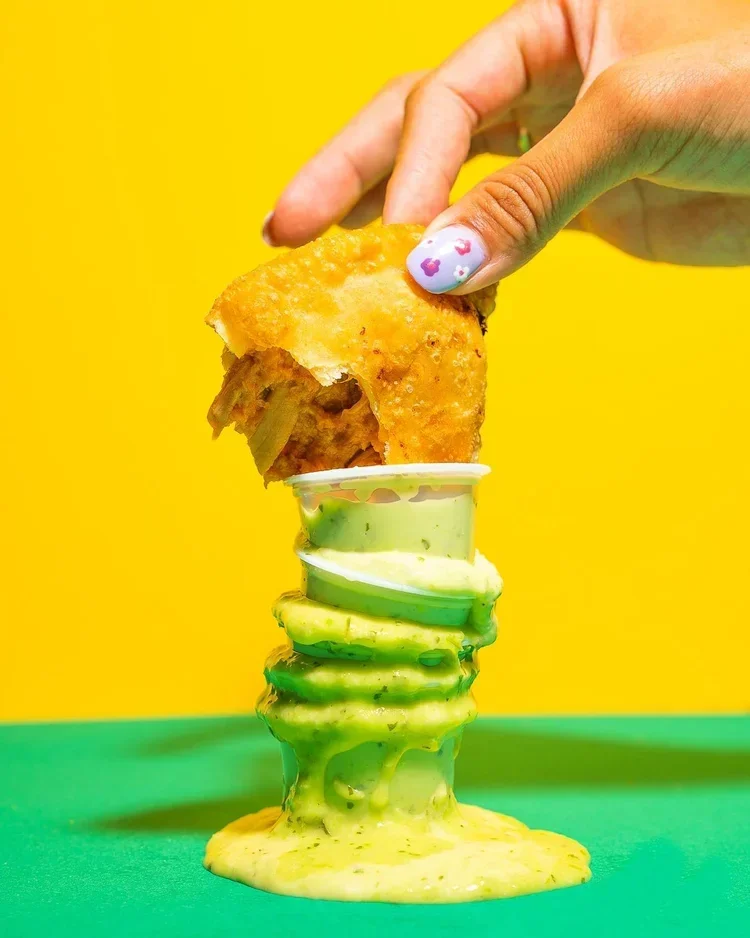
The filling needs to be completely cool before it touches the dough. Hot filling softens the shell on contact and creates steam pockets that weaken the seal. Made it an hour ago, and it's still warm? Wait.
Drain wet ingredients. Cooked onions, tomatoes, spinach, and most protein- all release liquid as they cool. Press the filling against the side of the bowl or run it through a strainer before assembly. A dry filling protects the crust from the inside out.
Keep portions modest. One heaping spoonful is usually enough. Overfilling stretches the dough thin, makes sealing harder, and causes blowouts in the oven or fryer that let oil and moisture in.
Sealing, Baking, and Getting That Golden Crunch
A tight seal keeps the filling in and the structure intact. Fold the dough over, press the edges firmly, then crimp with a fork or use a classic repulgue fold. Don't rush it. A loose seal opens under heat and ruins both the shape and the crunch.
Egg wash is non-negotiable for baked empanadas. One egg, beaten with a splash of water and brushed lightly over the surface, gives you that deep golden color and a slightly lacquered shell. Apply it right before they go in.
Get the Crunch Without the Kitchen Guesswork

Crispy empanada dough takes patience: cold fat, dry filling, tight sealing, the right heat, and zero shortcuts. But when the craving is bigger than the prep list, Empanada Mama makes it easy to get the payoff without having to troubleshoot the dough. Every bite brings that golden shell, sealed edge, and bold filling you were chasing in the first place.
Skip the soggy-bottom stress, leave the technique to us, and order crispy empanadas from Empanada Mama.