
You know that sinking feeling when your homemade empanada splits open in the pan and all that filling spills into the oil? It's not a dough problem. It's not a filling problem. It's a folding problem.
Folding is the skill that separates an empanada that holds together, stays juicy, and comes out golden and intact from one that falls apart before it hits the plate. Get the fold right and everything else follows.
By the time you finish reading, you'll know exactly how to fold, seal, and crimp an empanada that stays closed through frying, baking, or anything in between.
What You Need Before You Start Folding
Before your hands ever touch the dough, get three things in order: your dough discs, your filling, and a clean, flat surface. That's the whole setup.
The overstuffing trap is real. One heaping spoonful too many and your dough can't seal cleanly at the edges. A tablespoon to a tablespoon and a half of filling is the right range for a standard disc. Leave at least a half-inch border around the edge and keep it clean and dry.
One more thing most people skip: chill your dough before you fold. Slightly cold dough is firmer, more cooperative, and holds its shape as you work with it. Warm dough stretches unevenly and tears at the edges when you press down.
The Basic Fold: Your Starting Point
Every empanada fold starts in the same place: the half-moon. Place your filling in the center of the disc, and fold one side over to meet the other. That's the foundation on which every other technique builds.
Before you crimp, press the edges together firmly with your fingertips. Work from one end to the other. This step matters more than people realize. No crimp in the world holds if the two edges aren't already bonded underneath it.
Watch for air pockets. Air trapped inside the dough expands during cooking, pushing the seal open from the inside. Press the filling flat before folding, and coax any trapped air toward the open edge before you close it.
How to Seal Empanadas So They Actually Stay Closed

The fork press is your fastest, most beginner-friendly option. After pressing the edges together by hand, lay the tines of a fork flat along the seam and press down in overlapping segments all the way across. Clean, quick, and reliable every time.
Before sealing, run a thin line of water or egg wash along the inner edge of the dough. Water creates tackiness. Egg wash creates a stronger bond and adds color. Either one gives the seal something to grip.
A weak seal doesn't just look bad. In a fryer, pressurized steam inside the empanada finds the weakest point and blows through it. In the oven, filling bubbles out and burns onto the pan. Press firmly, seal completely, and don't rush it.
The Repulgue: How to Nail the Classic Rope Crimp
The repulgue is the decorative rope-style crimp you see on traditional Latin American empanadas. It's a technique passed down through generations across Argentina, Colombia, and beyond, and it does two things at once: seals the empanada and marks it as the real thing.
Here's how it works. After pressing the edges together, fold a small section of the rim upward, then fold that piece over itself at a slight angle and press it down. Move a centimeter forward and repeat. Each fold overlaps the last, building the rope pattern as you go.
The crimp needs to be firm, not just decorative. Press each fold down with intention. A loose repulgue looks nice but won't hold under heat. A tight one seals and looks exactly like it should.
Other Folding Styles Worth Knowing
The twist-and-tuck fold rolls the sealed edge inward and tucks it under itself, creating a rounded, compact border. It's fast once you get the motion down and works well for baking.
Across Latin America, regional styles vary. Some use a braided pinch. Others use a flat fold pressed with a stamp or mold. Each one reflects where the empanada comes from and what it's built to hold.
For frying, tighter folds with firm compression along the seam hold up best against high heat and oil pressure. For baking, a crimp style like the repulgue works fine since there's no pressurized oil to fight through. Match your fold to your cooking method, and you'll get cleaner results every time.
Common Folding Mistakes (and How You Fix Them)
Dough tearing at the edges usually comes from one of two places: you overfilled it, or you rolled the dough too thin near the rim. Keep filling away from the edge and roll your discs to an even thickness throughout.
Crimps that unravel mid-cook almost always mean you skipped the hand-press step before crimping. The crimp is a finishing layer, not the primary seal. Press the edges together first, every time.
Skip the Practice Batch and Go Straight to the Good Stuff
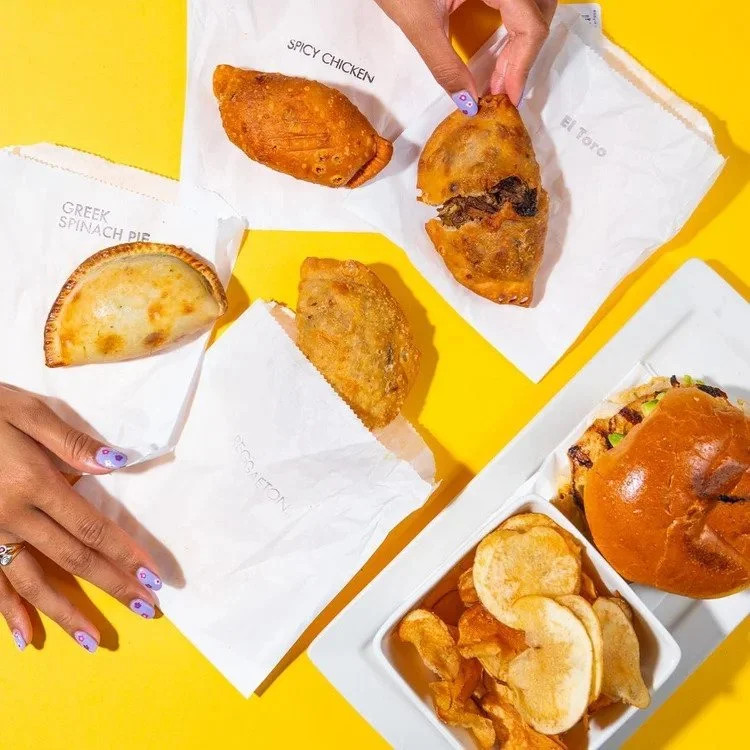
Folding empanadas at home is satisfying, but some cravings do not want a learning curve. When you want that golden, crispy outside, a tightly sealed edge, and a filling that actually stays where it belongs, Empanada Mama does the hard part for you. From late-night cravings to group orders, every empanada is made to hold up, travel well, and hit the table full of flavor.
So practice your fold when you feel like playing chef, but when hunger is already knocking, order empanadas from Empanada Mama.